Thinking about trading your D.C. condo for a Bethesda single-family home? You are not alone. For many move-up buyers, the appeal is clear: more space, more privacy, and a different day-to-day lifestyle. But this move also changes your budget, maintenance routine, and home search strategy. If you want a realistic picture of what to expect in Bethesda, this guide will help you plan your next step with confidence. Let’s dive in.
Why Bethesda Appeals to Move-Up Buyers
Bethesda already has a strong detached-home market, which makes it a natural fit if you are ready to move beyond condo living. According to the 2020-2024 ACS, 52.9% of housing units in Bethesda are 1-unit detached homes. Current market trackers also place the median sale price around $1.3 million, with average home values near $1.17 million and homes going pending in about 10 days.
That combination tells you two important things. First, detached homes are a major part of the local housing stock. Second, competition can move quickly, especially when a well-located and well-presented home hits the market.
What “More Space” Looks Like in Bethesda
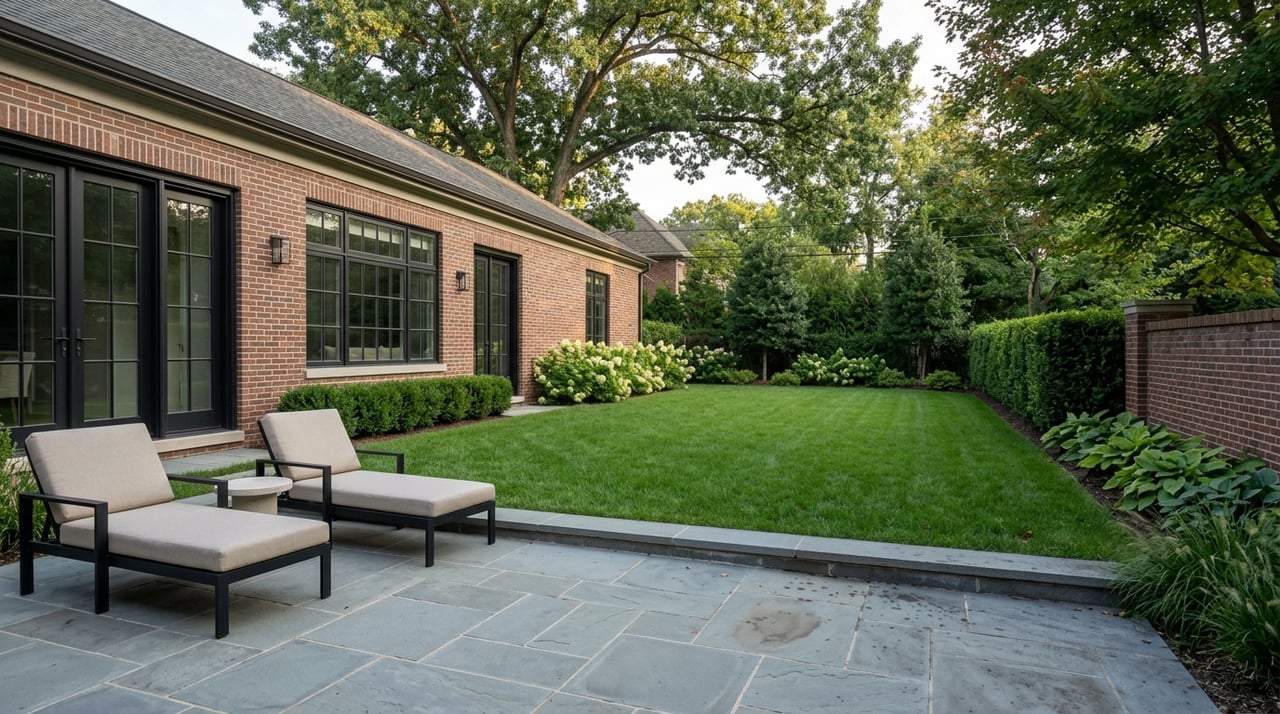
One of the biggest mental shifts when moving from a condo to a house is understanding that Bethesda is not one-size-fits-all. The area offers a wide range of lot sizes and home settings, depending on where you look and what type of property you want.
Montgomery County zoning helps show that range. In Bethesda, R-60 detached-home lots have a 6,000 square foot minimum, RE-1 requires 40,000 square feet, and RE-2 requires 2 acres. That means your idea of a Bethesda single-family home could be a more compact close-in lot or a much larger property with a very different feel.
Recent listing examples reflect that spread. Existing homes have appeared on lots around 5,997, 7,386, 9,500, and 10,340 square feet, while some new-construction homes reach about 0.27 acre or even 0.71 acre. In practical terms, you should expect lot size, yard usability, and privacy to vary a lot from one part of Bethesda to another.
Close-In Lots vs Larger Parcels
If you want easy access to downtown Bethesda, Metro, and everyday conveniences, you may find smaller lots with older homes or rebuilt properties. These can still offer a meaningful jump in interior space compared with a condo, even if the outdoor footprint is moderate.
If your goal is a larger yard or more separation between homes, you may need to expand your search parameters and budget accordingly. This is where local market insight matters, because two homes with similar square footage can deliver very different lifestyles based on lot size and setting.
The Budget Shift Is Bigger Than the Mortgage
A larger home usually means a larger monthly payment, but that is only part of the story. When you move from a condo to a detached home, your housing costs often become less bundled and more variable.
Consumer homebuying guidance notes that your monthly payment can include principal, interest, property taxes, homeowners insurance, and HOA fees. It also advises buyers to budget for closing costs, maintenance, repairs, and utilities. For a move-up buyer in Bethesda, that matters because you are not just buying more square footage. You are also taking on a different cost structure.
Property Taxes in Bethesda
Montgomery County’s FY2027 general real property tax rate is 0.6706 per $100 of assessed value. Bethesda also has an additional urban district rate of 0.0120 per $100. On a $1.3 million home, those two levies alone total about $8,874 per year before any other district or state charges.
The county also lists other potential special district levies, including transit, fire, and recreation, so the final tax bill can be higher. County 311 says the county transfer tax is typically 1% of the selling price, which is another cost to plan for during the purchase.
Assessment Caps Can Help Owner-Occupants
Maryland and Montgomery County offer the Homestead Property Tax Credit for principal residences, generally capping taxable assessment growth at 10%. That does not make a larger home inexpensive to carry, but it can help moderate future assessment-driven tax increases if you will live in the home as your primary residence.
Maintenance Reserves Matter More
A condo owner is often used to a more predictable monthly setup, where some exterior upkeep and shared expenses are wrapped into condo fees. In a detached home, more of those responsibilities shift directly to you.
Homeownership guidance notes that owners should budget for maintenance, repairs, utilities, property taxes, homeowners insurance, and any HOA fees. It also points out that you are responsible for repairs ranging from a leaky faucet to a roof replacement. In other words, upsizing is not only a lifestyle upgrade. It is also a cash-flow change, and having a healthy reserve becomes much more important.
Commute and Access Still Matter
Many D.C. condo owners choose urban living because they value convenience. If that sounds like you, the good news is that Bethesda remains highly connected.
Bethesda Station is on WMATA’s Red Line. The station has no parking, but it does offer bike racks, lockers, and bikeshare access. Montgomery County Ride On operates more than 80 routes and currently offers zero-fare service on Ride On, Ride On extRa, Ride On Flex, and Flash.
Downtown Bethesda also has the free Bethesda Circulator, which connects shops, theaters, restaurants, parking garages, and Metro. Bethesda Urban Partnership describes downtown as a walkable mixed-use district with shopping, dining, and cultural programming, which can help preserve some of the convenience you may love about city living.
A Note on Current Transit Conditions
Commute planning should include current conditions, not just the long-term map. WMATA says no Red Line trains are running between North Bethesda and Friendship Heights from July 6 to September 6, 2026, with shuttle buses replacing that segment during construction.
WMATA also says it is building a new south mezzanine at Bethesda Station to connect Metrorail to the future Purple Line station. That mezzanine will not be accessible until the Purple Line opens in 2027. If your move timeline is near-term, this is worth factoring into your home search and commuting expectations.
How to Compare Condo Living to House Living
Before you start touring homes, it helps to define what you actually want to improve. More space is rarely just about square footage. It is usually about how you want your day-to-day life to function.
Ask yourself where your condo feels tight or limiting right now. You may want a dedicated home office, more storage, a private outdoor area, or room for guests. You may also want a different pace of living without giving up access to transit, dining, and services.
Here are a few practical categories to compare:
- Interior space and room count
- Storage capacity
- Outdoor space and lot size
- Monthly carrying costs
- Maintenance responsibilities
- Commute options and transit access
- Speed of the local market
When you compare homes through that lens, you can make a cleaner decision between a house that simply looks bigger and one that truly fits your next chapter.
What a Smart Move-Up Plan Looks Like
A successful move from a D.C. condo to a Bethesda single-family home usually comes down to planning. In a fast-moving market, clarity helps you act quickly without stretching beyond your comfort zone.
Start with these steps:
- Set your full housing budget. Include taxes, insurance, utilities, repairs, and purchase costs, not just principal and interest.
- Define your must-haves. Separate true needs from nice-to-haves, especially around lot size, location, and commute.
- Study the lot-size tradeoff. A closer-in home may offer convenience with a smaller yard, while a larger parcel may require a different budget or commute pattern.
- Plan for ongoing upkeep. Build a reserve for repairs and seasonal maintenance from day one.
- Prepare for speed. With homes going pending quickly, strong preparation can help you move decisively when the right property appears.
Why Local Guidance Makes a Difference
Moving up in Bethesda is not only about finding a larger home. It is about balancing lifestyle, financial comfort, and long-term fit in a market where details matter.
That is where a high-touch advisor can add real value. From narrowing the search by lot type and location to helping you understand the practical cost of ownership, thoughtful guidance can save time and reduce stress. If you are also selling a condo, coordinated planning becomes even more important.
With white-glove coordination, local market insight, and hands-on support throughout the process, Gurdeep Mangat can help you plan your move from D.C. condo living to the right Bethesda single-family home with clarity and confidence.
FAQs
What does a typical Bethesda single-family lot look like?
- Bethesda lot sizes vary widely. Montgomery County zoning ranges from 6,000 square foot minimum lots in R-60 zones to 40,000 square feet in RE-1 and 2 acres in RE-2, so the feel of a property can differ a lot depending on location.
How competitive is the Bethesda single-family home market?
- Current market trackers place the median sale price around $1.3 million, estimate average home value near $1.17 million, and show homes going pending in roughly 10 days.
What extra costs should I expect when moving from a D.C. condo to a Bethesda house?
- In addition to your mortgage payment, you should plan for property taxes, homeowners insurance, utilities, maintenance, repairs, closing costs, and transfer costs.
How much are property taxes on a Bethesda home?
- Montgomery County’s FY2027 general real property tax rate is 0.6706 per $100 of assessed value, and Bethesda adds an urban district rate of 0.0120 per $100. On a $1.3 million home, those two levies alone total about $8,874 per year before other charges.
Does Bethesda still work for buyers who want transit access?
- Yes. Bethesda has Red Line service, Ride On bus service, and the free Bethesda Circulator, which helps support transit-oriented and walkable daily routines.
What should buyers know about Bethesda transit construction in 2026?
- WMATA says Red Line service is suspended between North Bethesda and Friendship Heights from July 6 to September 6, 2026, with shuttle buses replacing service on that segment during construction.