Wondering whether an Arlington condo should feel more like a city tower, a balanced low-profile building, or a quieter garden community? If you are buying in Arlington, that choice matters because your building style can shape your monthly costs, commute, noise level, and daily routine just as much as the unit itself. This guide will help you compare high-rise, mid-rise, and garden-style condos in Arlington so you can choose a home that fits the way you actually live. Let’s dive in.
Why condo style matters in Arlington
Arlington is a heavily multifamily housing market, so condo buyers here usually are not deciding between condo living and something else. More often, you are deciding which type of condo living fits your priorities best.
County data shows how common these options are. Arlington’s 2025 housing dashboard reports 14,802 elevator condos and 11,562 garden condos, while the county profile shows that 71.3 percent of Arlington’s housing units are multifamily. That means building form, amenities, and location patterns are central to your decision.
Arlington’s three main condo styles
High-rise condos in Arlington
Arlington defines high-rise multifamily buildings as 9 stories or more. In practical terms, high-rise condos usually offer the most urban feel, with more vertical living, more shared systems, and often the broadest amenity package.
For many buyers, this style works well if you want a lock-and-leave lifestyle and easy access to transit. High-rise living is often a strong fit for commuters, downsizers, and relocating professionals who value convenience and building services.
Mid-rise condos in Arlington
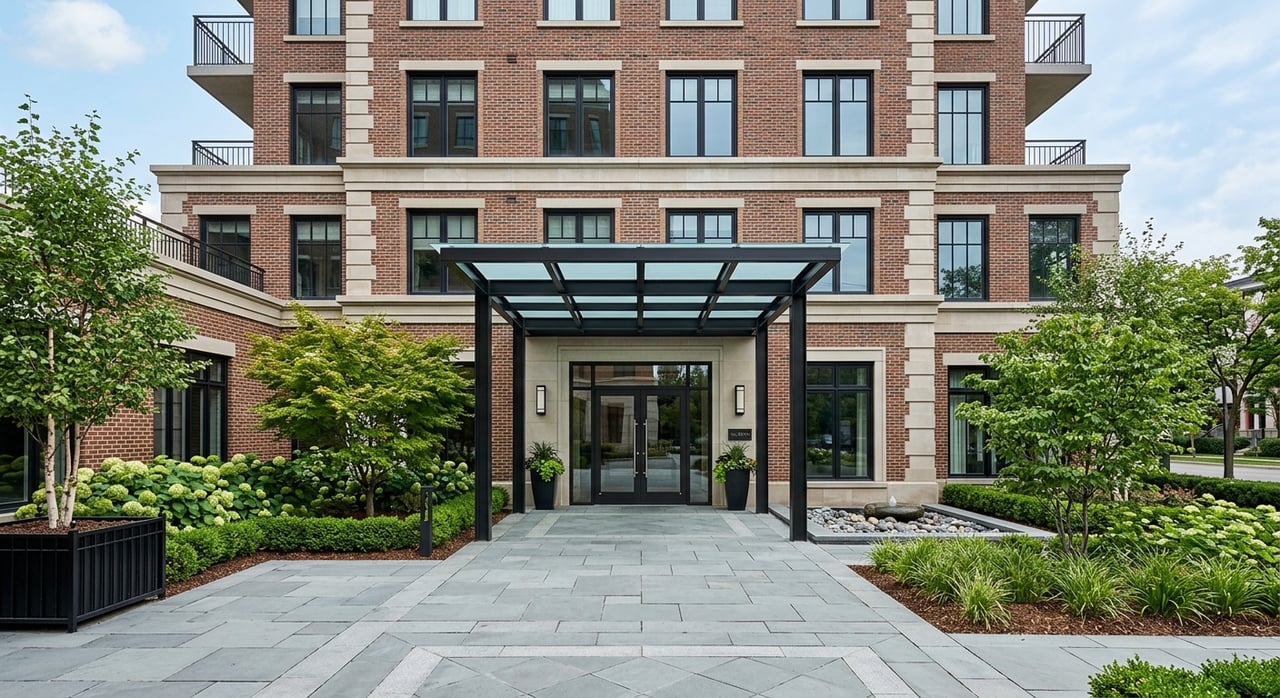
Mid-rise buildings are 4 to 8 stories. They sit between tower living and low-rise communities, and they often give you a mix of convenience and a somewhat smaller-scale feel.
Many Arlington buyers see mid-rise condos as the middle-ground option. You may still find elevators and some amenities, but the building often feels less intense than a taller tower.
Garden-style condos in Arlington
Garden-style buildings are 1 to 3 stories. In Arlington, older garden-style communities are often found in established areas such as Westover, Waverly Hills, and Penrose, and county materials also identify low-rise garden-style housing in Radnor/Fort Myer Heights.
If you prefer lower-rise living, easier ground-level access, and a more residential feel, garden-style condos often deserve a close look. They can appeal to buyers who want Arlington access without the feel of a larger tower.
How each condo style fits your lifestyle
Choose high-rise if you want urban convenience
If your week revolves around commuting, dining out, and keeping home maintenance simple, a high-rise may feel like the easiest fit. Arlington’s planning and transit network concentrate higher-density development along major corridors, especially near Metro stations.
The county says high-density development is generally concentrated within a quarter-mile of each Metro station entrance. WMATA stations in Arlington include Rosslyn, Court House, Clarendon, Virginia Square-GMU, and Ballston-MU, which is one reason high-rise condos often align well with a car-light lifestyle.
Choose mid-rise if you want balance
A mid-rise condo can make sense if you want urban convenience without going all-in on tower living. This option often appeals to buyers who want a building that still feels connected to transit and services but with a calmer scale.
In many cases, mid-rise buildings strike a practical balance between shared amenities, building size, and monthly carrying costs. If you are not sure whether you want the full high-rise experience, this is often the style worth comparing first.
Choose garden-style if you want lower-rise living
Garden-style condos often fit buyers who want a quieter rhythm and a more grounded day-to-day feel. While transit convenience depends on the exact location, these communities can offer a lower-density setting that feels different from Arlington’s taller corridor buildings.
That can be especially appealing if you value easier outdoor access or simply prefer fewer floors and less shared-building activity. In Arlington, this style can offer a useful alternative without leaving the county’s broader job and transit network.
Compare monthly cost, not just price
One of the biggest mistakes condo buyers make is focusing too much on sale price and not enough on total monthly cost. Condo or HOA dues are generally paid directly to the association and are not included in your monthly mortgage payment.
That matters because your true carrying cost can look very different from one building to another. Arlington’s Condo Initiative also points to rising fees and capital expenses as an important issue in existing condos, especially in older buildings.
What fees usually reflect
In Virginia, condominium associations collect mandatory assessments to maintain and improve common elements. Depending on the building, that can include items such as pools, clubhouses, roads, signage, and other shared features.
As a general market pattern, high-rise buildings often carry the highest fee burden because they usually maintain the most shared infrastructure and amenities. Garden-style communities are often at the lower end, while mid-rise buildings often land somewhere in the middle.
Ask about future costs
Current dues are only part of the picture. You should also ask whether there are planned fee increases, major capital projects, or signs that the association may need more funds for repairs and maintenance.
This is especially important in Arlington, where existing condominiums can be a meaningful source of ownership opportunities at lower price points. County materials note that condos are the most likely source of affordable ownership opportunities for low- and moderate-income households when the sales-price ceiling is $500,000, which makes reserve strength and building condition especially important in older stock.
Think about noise and privacy
Noise is one of the most personal parts of condo living, and it does not always line up perfectly with building type. Still, each style tends to come with its own pattern.
High-rises may reduce some street noise on upper floors, but they can bring more elevator, hallway, and amenity-area activity. Garden-style condos may feel more low-key overall, but they can sit closer to parking lots, sidewalks, or ground-level activity.
Mid-rise buildings often fall somewhere between those two experiences. Still, noise should be treated as a building-by-building question, because orientation, construction quality, and proximity to busy corridors all matter.
Match your condo to your commute
Arlington’s transit system is designed to support residents, commuters, and visitors without requiring car ownership. The county’s main planning corridors run along the Rosslyn-Ballston Metrorail corridor, Richmond Highway, and Columbia Pike.
That broader pattern gives you a useful shortcut when comparing condo styles. High-rise and many mid-rise condos are often the easiest fit for a Metro-oriented or car-light routine, while garden-style communities may trade some transit convenience for a lower-density setting.
That said, location still comes first. A garden-style condo near ART, Metrobus, or Metro can be more practical for your routine than a high-rise that misses your daily priorities.
Arlington neighborhoods and building context
In Arlington, condo style and neighborhood context often go hand in hand. Taller elevator buildings are common along major transit corridors, while lower-rise garden-style communities remain important in established neighborhoods.
For example, Arlington County specifically references Westover, Waverly Hills, and Penrose in its discussion of older garden-style housing. Radnor/Fort Myer Heights is another area where county materials identify low-rise garden-style multifamily housing alongside low- and mid-rise buildings.
That does not mean one area is better than another. It simply means your preferred condo style may naturally steer you toward certain parts of Arlington based on building patterns and density.
Smart questions to ask before you buy
Before you choose a condo style, make sure you look beyond finishes and square footage. In Virginia, condo purchases involve common-interest-community rules and resale disclosures, so the documents matter.
The Virginia DPOR Ombudsman explains that condominium associations can enforce rules and collect mandatory assessments, and DPOR says the standardized resale-certificate form has been required for resales since July 1, 2023. The seller is generally responsible for resale-certificate preparation and delivery fees.
Questions that help you compare buildings
- What are the current condo dues?
- Have dues increased recently?
- Are any major capital projects planned?
- What do the reserves and building condition suggest about future costs?
- What rules apply to pets, parking, leasing, and short-term rentals?
- How does the building’s location affect commute options and daily convenience?
Short-term rental rules deserve special attention. Arlington’s short-term rental guidance says county permits do not override condo or HOA restrictions, which means a building may be stricter than local zoning rules.
A simple Arlington condo decision guide
If you want the shortest version, start here. The right condo style usually comes down to what you are willing to trade for convenience, scale, and monthly cost.
| Condo style | Often best for | Typical trade-off |
|---|---|---|
| High-rise | Metro access, amenities, lock-and-leave living | Higher dues and more shared-building activity |
| Mid-rise | Balanced convenience and scale | Fewer amenities than some towers, but still shared systems |
| Garden-style | Lower-rise living and more residential feel | Transit convenience may vary more by location |
The best choice is the one that supports your real routine. A beautiful condo only feels right if the building style, fees, and location work with the way you live every day.
If you are comparing Arlington condos and want clear guidance on lifestyle fit, building trade-offs, and the details that can affect long-term value, Gurdeep Mangat offers the kind of local insight and white-glove guidance that can make your search far more confident and efficient.
FAQs
What condo style is most common in Arlington, VA?
- Arlington has a large multifamily housing stock, and county data shows substantial inventory in both elevator condos and garden condos, so buyers commonly compare building style rather than deciding whether condos are available.
What is the difference between a high-rise and mid-rise condo in Arlington?
- In Arlington, high-rise buildings are 9 stories or more, while mid-rise buildings are 4 to 8 stories. High-rises often feel more urban and amenity-focused, while mid-rises often offer a smaller-scale balance.
What is a garden-style condo in Arlington?
- A garden-style condo is in a 1 to 3 story building. In Arlington, these communities are often associated with lower-rise living, easier ground-level access, and a more residential setting.
Are Arlington high-rise condos better for commuting?
- They often are, especially near Metro corridors such as Rosslyn, Court House, Clarendon, Virginia Square-GMU, and Ballston-MU, because Arlington concentrates higher-density development close to transit.
Do Arlington condo fees vary by building style?
- Yes. As a general market pattern, high-rise condos often have higher dues because of greater shared infrastructure and amenities, while garden-style communities are often lower and mid-rise buildings often fall in between.
What should you review before buying an Arlington condo?
- You should review current dues, possible fee increases, planned capital projects, association rules, and the resale certificate so you understand the building’s costs, policies, and overall condition.